
Content
The Cognitive and Social Advantages
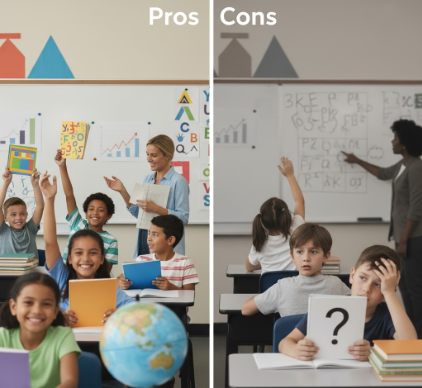
One of the most widely cited benefits of bilingual education lies in its positive impact on cognitive development. Research suggests that the process of navigating two language systems enhances a student’s executive functions. These are the high-level mental skills that include problem-solving, switching between tasks (multitasking), and selective attention. Students in bilingual programs are constantly mentally “juggling” two vocabularies, two sets of grammar rules, and two ways of structuring thought. This mental workout is believed to build a more flexible and resilient brain. Beyond abstract cognitive skills, these benefits can translate into tangible academic performance. While there might be an initial adjustment period, studies often show that bilingual students eventually catch up to, and in some cases surpass, their monolingual peers in subjects like reading and math. They develop a stronger metalinguistic awareness, which is the ability to think and talk about language itself. This deeper understanding can make them more effective communicators and learners overall.Verified Information: Numerous studies have linked bilingualism to enhanced cognitive flexibility and executive control. Research published in various linguistic and psychological journals indicates that individuals who regularly use two languages often show advantages in tasks that require inhibitory control and attentional switching. These cognitive benefits appear to be a direct result of the brain managing two competing language systems.
Expanding Cultural Horizons
Education is not just about academics; it’s also about social and cultural development. This is perhaps where bilingual programs shine brightest. In a dual-language classroom, students are not just learning about another culture; they are actively participating in it through its language. This direct immersion fosters a level of empathy, appreciation, and understanding that is difficult to achieve through textbooks alone. Students learn to see the world from multiple perspectives, breaking down cultural barriers and reducing prejudice. For students from minority language backgrounds, bilingual education can be profoundly affirming. A maintenance or dual-immersion program validates their home language and heritage, integrating it into their formal education. This can significantly boost self-esteem and create a stronger sense of identity. Instead of being forced to choose between their home culture and the dominant school culture, they are taught that both are valuable. In the long term, these individuals are better equipped for a globalized workforce, able to connect with a wider range of people and navigate diverse professional environments.The Practical Challenges and Criticisms
Despite the compelling benefits, implementing effective bilingual education is fraught with challenges. The most significant hurdle is often resources. A successful program requires a steady supply of highly qualified teachers who are not only fluent in both languages but are also trained in the specific methodologies of bilingual instruction. Finding, training, and retaining such educators can be difficult and expensive for school districts. Furthermore, curriculum development and instructional materials are more complex. Schools need high-quality books, software, and assessment tools in two languages, ensuring they are culturally appropriate and aligned with academic standards. For less common languages, these resources may be scarce or non-existent, placing an additional burden on teachers to create their own materials.Concerns Over Academic Pacing and Social Dynamics
A common concern among parents is that bilingual education might slow down their child’s academic progress. The fear is that the cognitive load of learning core subjects like math or science in a second language will cause students to fall behind, particularly in the early grades. While research suggests this lag is usually temporary, it can be a source of significant anxiety for families and pressure on schools. There is also the potential for unintended social consequences. If not carefully managed, bilingual programs can sometimes lead to segregation within a school. Students might be grouped according to their language background, creating an “us vs. them” dynamic. For example, in a transitional program designed to move non-native speakers into mainstream classes quickly, these students might feel isolated. Conversely, in a dual-immersion program, social cliques can sometimes form along language lines. Creating a truly integrated and collaborative classroom environment requires constant and deliberate effort from the school staff.Finding the Right Model
Not all bilingual education is the same. The “pros and cons” often depend heavily on the specific model being used. Understanding these differences is key to evaluating a program’s potential.- Transitional (Early-Exit): The goal is to shift students into English-only instruction as quickly as possible. The home language is used as a temporary bridge. While resource-efficient, this model does not promote full bilingualism and can send the message that the home language is less valuable.
- Maintenance (Late-Exit): These programs aim for full bilingualism and biliteracy. Students receive instruction in both their home language and a second language for many years, often through elementary school. This model is strongly associated with the cognitive and cultural benefits but requires a long-term commitment and more resources.
- Two-Way/Dual Immersion: This is often considered the gold standard. The classroom is balanced with native speakers of both languages (e.g., 50% native Spanish speakers and 50% native English speakers). Instruction is given in both languages, and students act as language models for each other. This model excels at fostering both bilingualism and cross-cultural understanding.


